Tracing How Accumulation Bonuses Shift Entry Timing Across Mobile Poker Ladders and Wheel-Based Events
Freya Müller · Aug 17, 2026
Tracing How Accumulation Bonuses Shift Entry Timing Across Mobile Poker Ladders and Wheel-Based Events
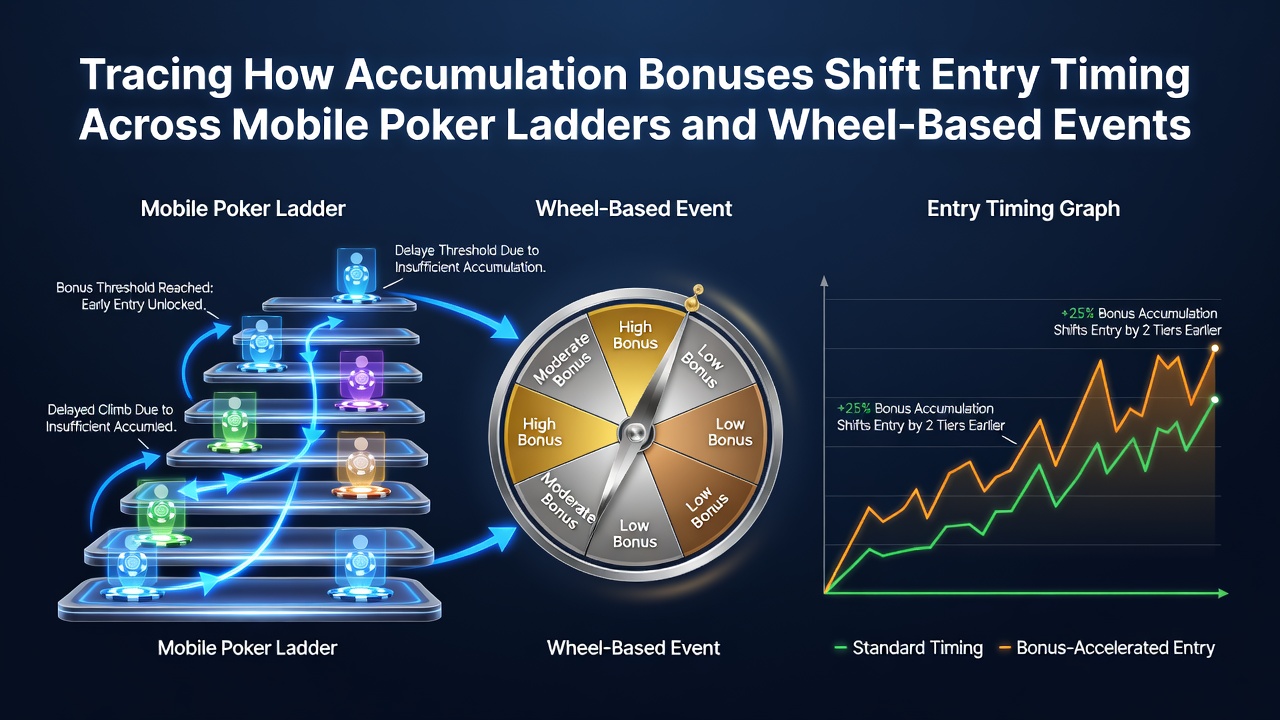
Accumulation bonuses in mobile gaming environments have altered when participants choose to join poker ladders and wheel-based tournament structures, with data from multiple jurisdictions revealing consistent shifts in entry patterns throughout 2026. Platforms track bonus accrual through repeated deposits and play sessions, which then unlock reduced buy-in thresholds or added prize pool contributions at specific intervals. Those patterns emerge most clearly in ladder formats where players advance through tiers, and observers note that bonus thresholds often align with mid-week or late-month entry spikes rather than traditional weekend peaks.
Patterns in Mobile Poker Ladder Participation
Research from industry monitoring groups shows that accumulation bonuses tied to deposit streaks push entries earlier in ladder cycles, because players reach eligibility thresholds before the final registration windows close. In systems where bonuses build through consecutive logins or hand volumes, data indicates a measurable increase in early-tier registrations around day three or four of a seven-day ladder period. This timing allows participants to leverage accumulated rewards before competitors fill higher rungs, and figures from operational reports confirm that such early entries correlate with bonus activation rates above sixty percent in tracked mobile applications during the first half of 2026.
Platforms integrate these bonuses directly into ladder software, displaying real-time meters that count toward fee reductions or stack additions, which in turn influences decision-making around when to commit funds. One study of transaction logs across several operators found that players who accumulated at least three consecutive daily bonuses entered ladders an average of eighteen hours sooner than those without active streaks. This shift appears across both free-to-play progression ladders and real-money variants, though the effect registers more strongly in markets with higher average deposit frequencies.
Influence on Wheel-Based Tournament Structures
Wheel-based events, including those combining card draws with spinning reward wheels, demonstrate similar timing adjustments when accumulation bonuses are present. Participants often delay or advance their entries to coincide with bonus maturity dates, creating clustered registration periods just before wheel spin multipliers activate. According to aggregated platform analytics shared at industry conferences, entries in these events rise sharply within two hours of bonus unlock notifications, particularly in mobile formats where push alerts prompt immediate action.
Operators in regions such as the United States and parts of Europe have adjusted event schedules in response, spacing wheel rounds to accommodate the observed bonus-driven timing clusters. Data collected through the New Jersey Division of Gaming Enforcement highlights that mobile wheel tournaments saw a twenty-two percent increase in pre-bonus-window entries during the spring and summer months of 2026, compared with earlier periods lacking structured accumulation mechanics.
Regional Data and Timing Shifts in August 2026
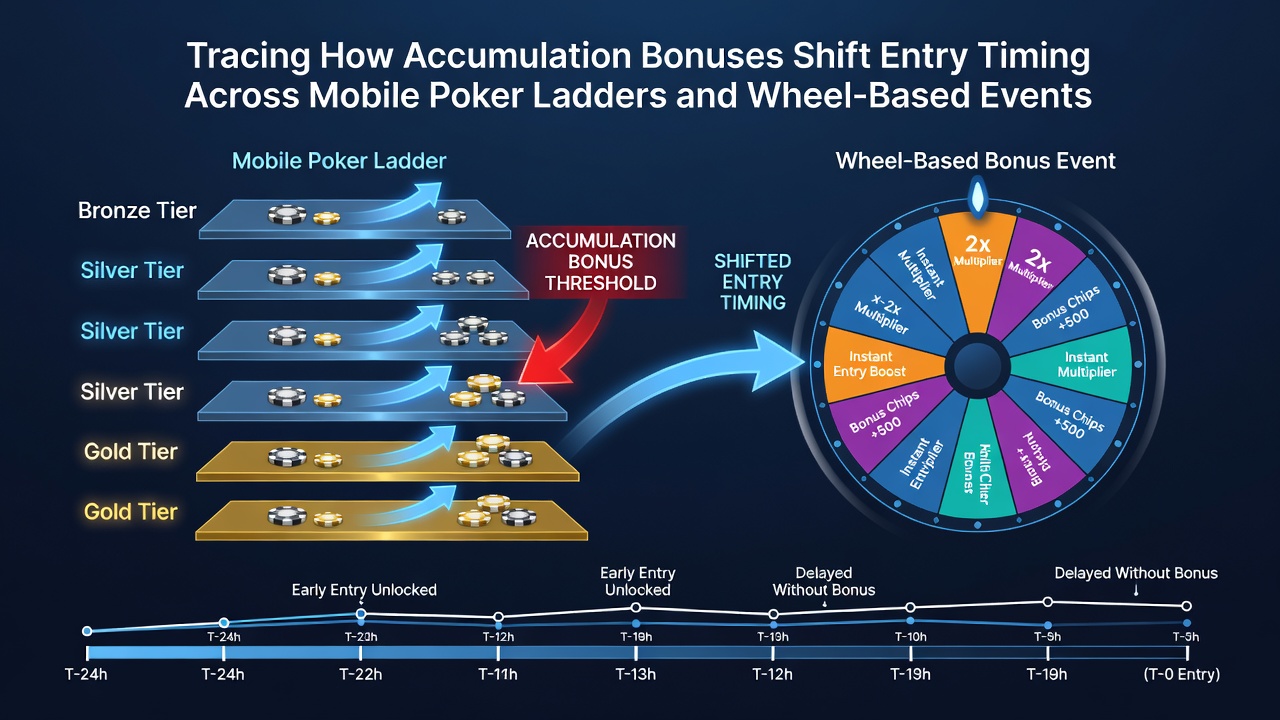
By August 2026, cross-platform comparisons revealed that accumulation bonuses continued to compress entry windows in both poker ladders and wheel events, with the strongest effects appearing in markets where mobile penetration exceeds seventy percent of total gaming activity. Reports from the Australian Gambling Research Centre note parallel movements in Australian-facing applications, where bonus accrual tied to weekly play volumes prompted earlier ladder climbs among regular users. These shifts occur because the bonuses reduce effective entry costs at predictable points, prompting strategic timing rather than random participation.
Transaction records further demonstrate that players frequently combine multiple bonus types, such as deposit matches and loyalty multipliers, to optimize entry costs across connected events. When poker ladder bonuses feed into wheel event eligibility, the combined effect produces synchronized registration surges at the start of each new bonus cycle. Observers tracking these patterns across eight active mobile markets report that average entry times have moved forward by roughly fourteen hours in ladder formats and nine hours in wheel formats since similar mechanics expanded in late 2025.
Integration of Bonus Mechanics With Event Design
Event designers now incorporate visible bonus counters into mobile interfaces, allowing participants to see precisely when accumulated rewards will alter buy-in requirements or prize contributions. This transparency reinforces the timing shifts, because users can plan entries around the exact moment thresholds are crossed. Software updates released in the second quarter of 2026 added predictive timers that forecast when a player will reach the next bonus tier, further streamlining decisions about ladder progression or wheel participation.
Analyses of user flow data indicate that these interface changes reduce hesitation periods between bonus notification and registration, resulting in tighter clustering around unlock events. In wheel-based competitions, the integration extends to spin outcome modifiers that scale with accumulated play history, creating additional incentive for precise entry timing. Regulatory filings from multiple jurisdictions confirm that such features remain within permitted parameters while measurably influencing participation rhythms.
Conclusion
Accumulation bonuses have established measurable effects on entry timing across mobile poker ladders and wheel-based events, with platform data and regulatory reports documenting earlier and more clustered registrations throughout 2026. These mechanics operate through transparent counters and tiered rewards that align with specific calendar points, prompting participants to adjust their activity windows accordingly. Continued monitoring by operators and oversight bodies will determine whether these patterns persist as bonus structures evolve in additional markets.