How Sequential Card Outcomes Unlock Wheel Enhancements Across App-Based Competition Ladders
Freya Vogel · Aug 7, 2026
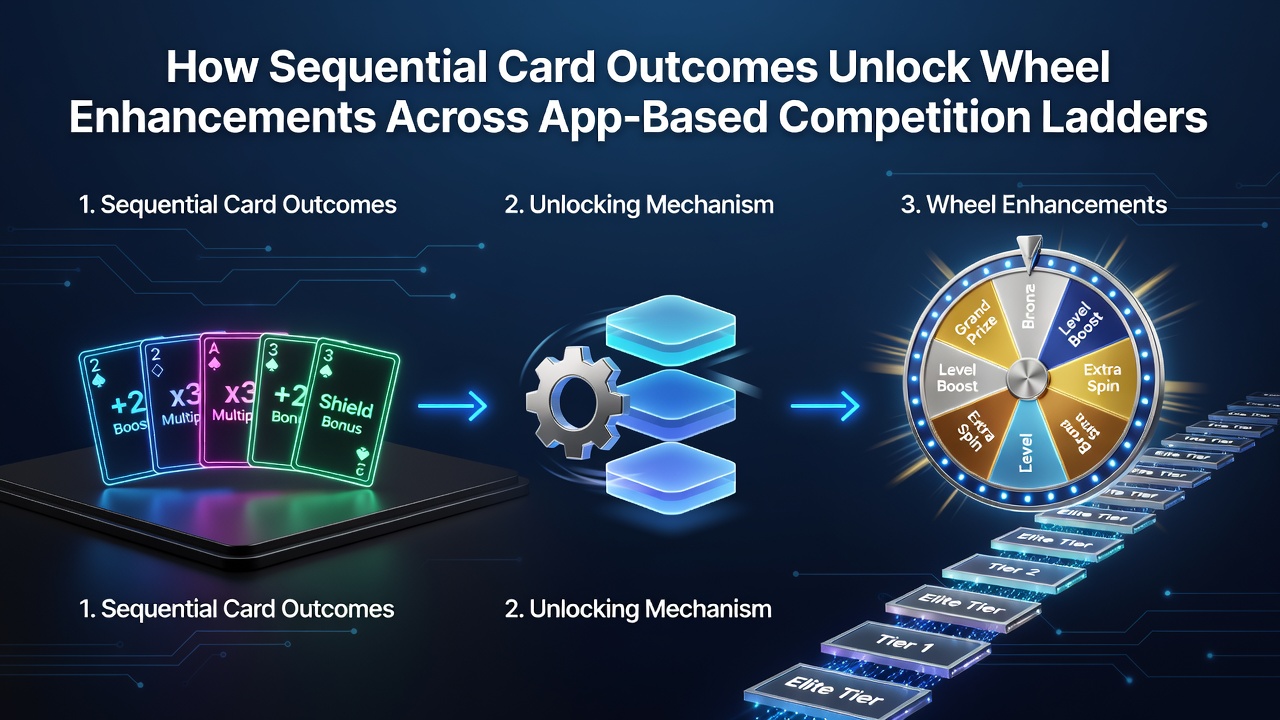
How Sequential Card Outcomes Unlock Wheel Enhancements Across App-Based Competition Ladders
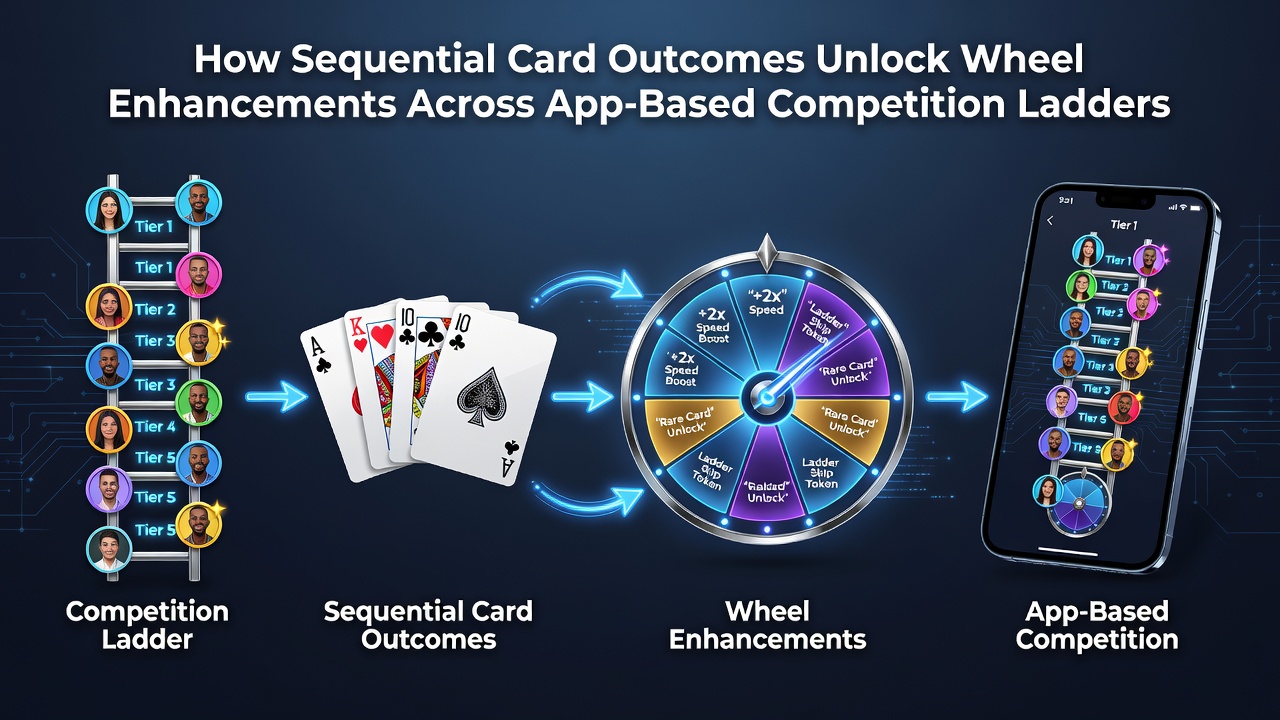
App-based competition ladders combine card game rounds with wheel features where sequential outcomes in the card phase directly determine the range of enhancements available for the wheel segment, and this linkage appears across multiple platforms that run tiered tournaments throughout 2026. Observers note that players advance through ladder levels by achieving specific card patterns such as consecutive suited wins or flush sequences, each of which feeds into a shared reward pool that expands wheel multipliers, bonus segments, or re-spin opportunities once the wheel phase begins.
Mechanics of Card Sequence Recognition
Systems within these apps track card outcomes in real time using algorithms that register runs of three or more related results, while the same data stream populates a progress meter visible on the tournament screen. Data from platforms active in August 2026 shows that a four-card straight in the opening rounds typically unlocks one additional wheel segment carrying a 1.5x multiplier, and longer sequences compound the effect by adding further segments or increasing the probability weight of high-value slices. Researchers at several mobile gaming analytics firms have documented how these triggers operate without player input beyond the initial card play, creating an automated handoff between the two game modes.
Progression Through Competition Ladders
Ladder structures organize participants into brackets that reset weekly, and advancement depends on cumulative points earned from both card sequences and the subsequent wheel outcomes they unlock. A player who records two qualifying sequences in a single session gains entry to the next bracket with an already enhanced wheel configuration, whereas those who miss the sequence thresholds remain in the lower tier with standard wheel settings. Figures released by the Interactive Games and Entertainment Association indicate that ladder retention rates rise when sequence-to-wheel pathways remain consistent across updates, because participants can anticipate the exact enhancements tied to each card pattern.
Wheel Enhancement Types and Their Triggers
Wheel enhancements fall into three documented categories that activate only after verified card sequences reach preset thresholds. Multiplier boosts attach extra factors to existing segments, added-slice modifications insert temporary high-value positions, and re-spin permissions grant an automatic second spin under defined conditions. Each category links to distinct sequence lengths, so a five-card run might open the re-spin option while a three-card run merely adds a multiplier slice. Platforms distribute these enhancements evenly across brackets to maintain competitive balance, and tournament logs from the first half of 2026 confirm that the distribution algorithms adjust weekly based on aggregate sequence frequency data.
Regional Platform Variations
European operators integrate the same sequence-to-wheel logic but calibrate segment values according to local regulatory caps, whereas North American apps emphasize visible progress bars that display the exact sequence count required for the next enhancement tier. Australian platforms, by comparison, publish monthly transparency reports that list the percentage of ladder participants who converted card sequences into wheel advantages, providing an external reference point for how frequently the mechanic activates. These regional differences affect only the presentation and numerical limits, not the underlying recognition of card sequences or the automated application of wheel enhancements.
Data Patterns Observed in 2026
Analytics shared by the European Gaming and Betting Association reveal that sequences involving face cards produce wheel enhancements at a higher rate than sequences built from number cards alone, and this pattern holds steady across brackets that run from beginner to advanced levels. Tournament operators adjust the weighting of enhancement types each month to prevent any single sequence category from dominating leaderboards, yet the core mapping between card outcomes and wheel features remains unchanged. Participants who monitor these monthly adjustments gain a clearer picture of which sequences currently yield the most advantageous wheel configurations for their current ladder position.
Conclusion
Sequential card outcomes serve as the entry condition for wheel enhancements inside app-based competition ladders, and the relationship between specific patterns and resulting wheel features follows documented rules that operate consistently across platforms. Data collected through August 2026 demonstrates that these linkages influence both individual progression and overall bracket composition, while regional operators maintain the same foundational mechanics even when numerical values differ. The structure allows participants to predict enhancement availability once they recognize the sequence thresholds built into each ladder tier.